Training program
Unbusy Your Workforce
Busyness is often psychosocial risk disguised as commitment. This 6- or 12-month program uncovers the work patterns keeping your people busy, and frees up bandwidth for focused, sustainable work.
The challenge
Think of the most reliable person on your team. They have your back, say yes, take on more, reply fast. That reliability looks like commitment, and it is usually rewarded. It can also be a pipeline to burnout, an unexpected resignation, or a team quietly leaning on one person to carry the load.
Unbusy Your Workforce treats busyness as what it often is: psychosocial risk disguised as commitment. It is not a time-management course, and it does not ask people to simply cope with more.
It starts with a survey of how your team actually works, then unpacks the specific patterns that quietly use up people’s bandwidth. From there, the team builds its mental and emotional capacity, forms work habits that support both productivity and wellbeing, and discovers each person’s genius zone: the work where they add the most value and lose the least energy. Finally, the unproductive patterns are taken out of the systems and processes that keep recreating them, so the change holds long after the workshops end.
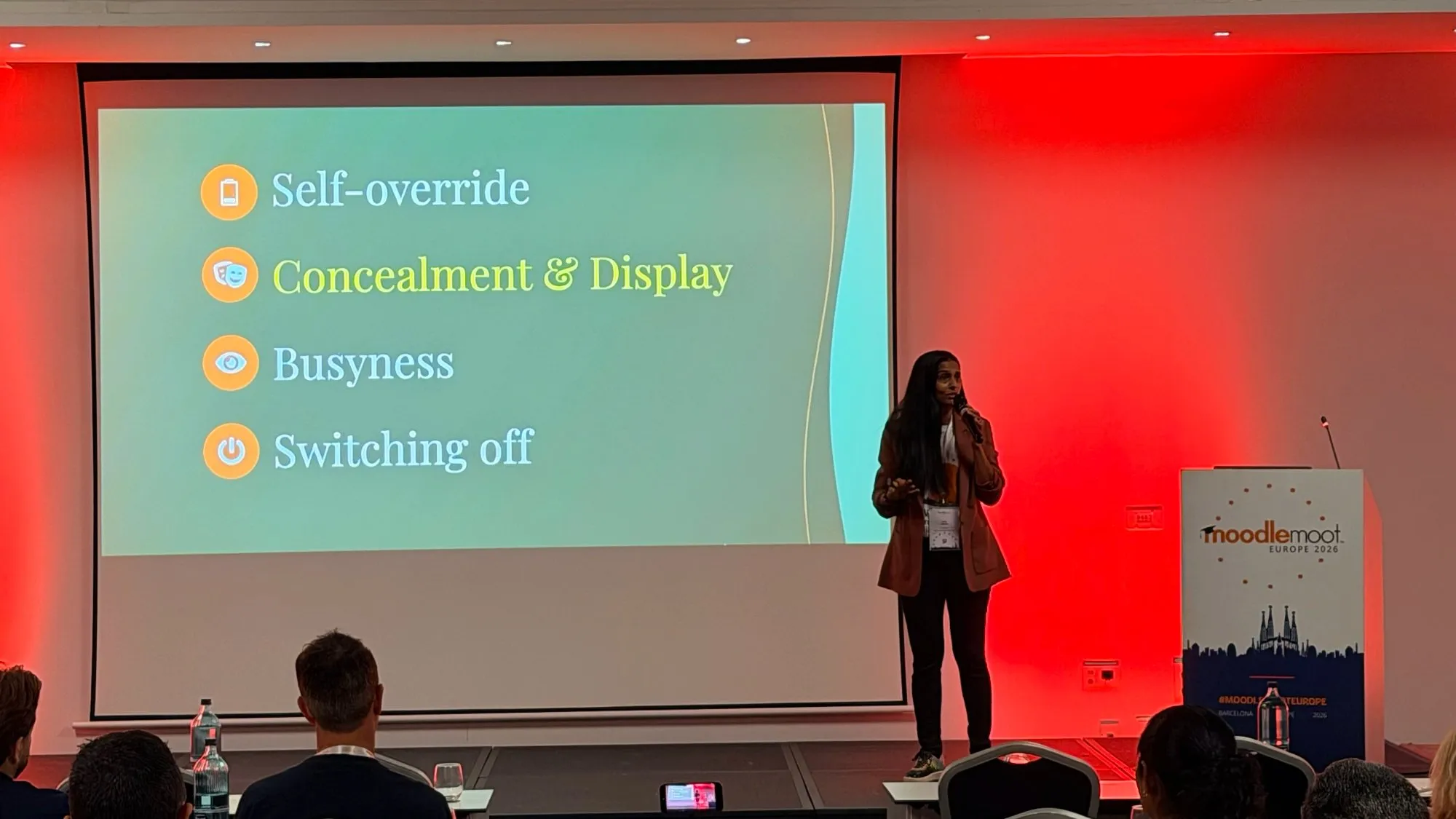
At the heart of the program are four patterns that keep busyness hidden:
- Self-override
- Concealment and display
- Busyness
- Switching off
These patterns come from Usha Raman’s Work Patterns and Wellbeing Survey, an anonymous survey of 210 working people about how they really work: taking on extra work at capacity, asking for help, pushing past tiredness, and switching off after hours. The full results will be published soon, and you can ask to be emailed the report below.
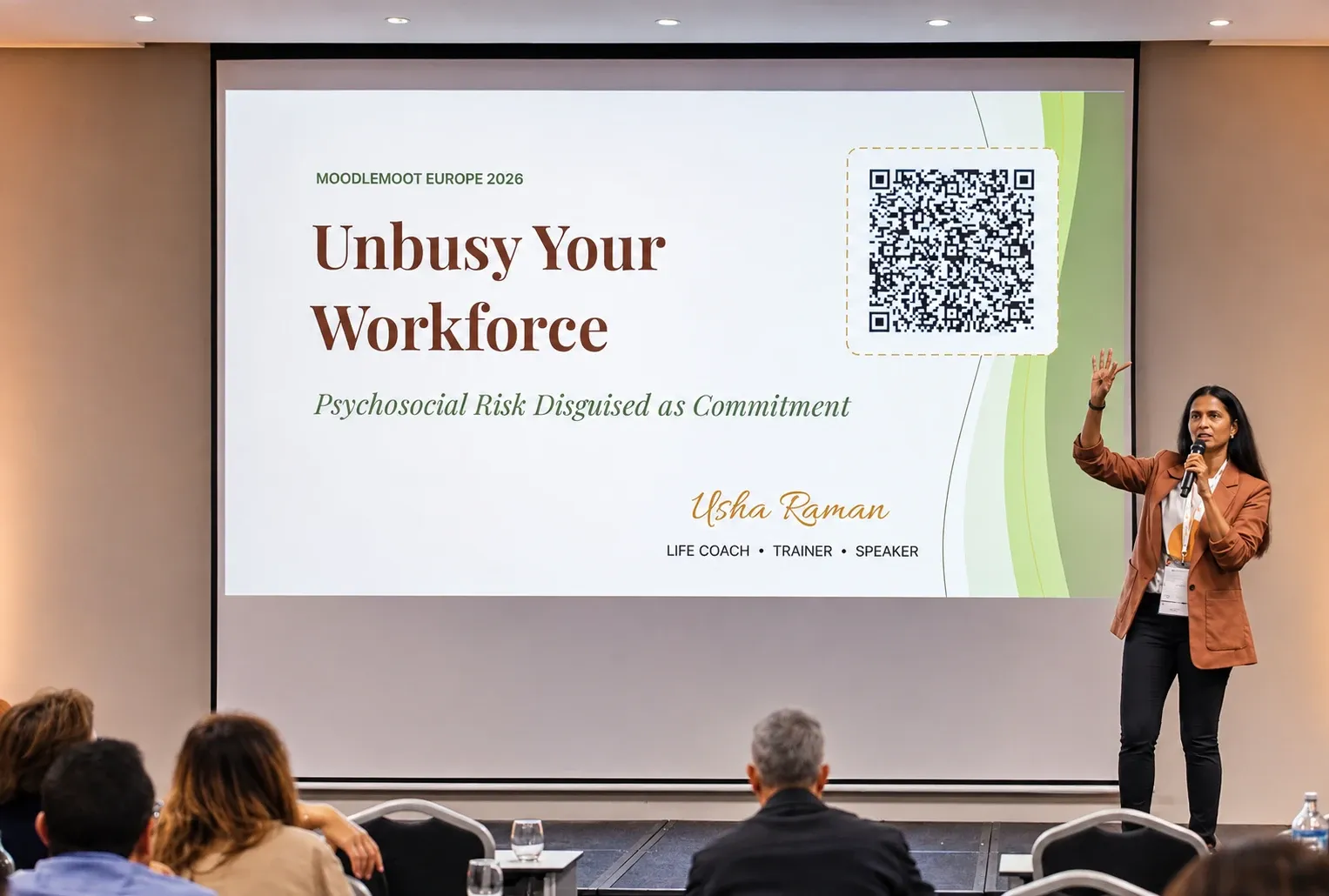
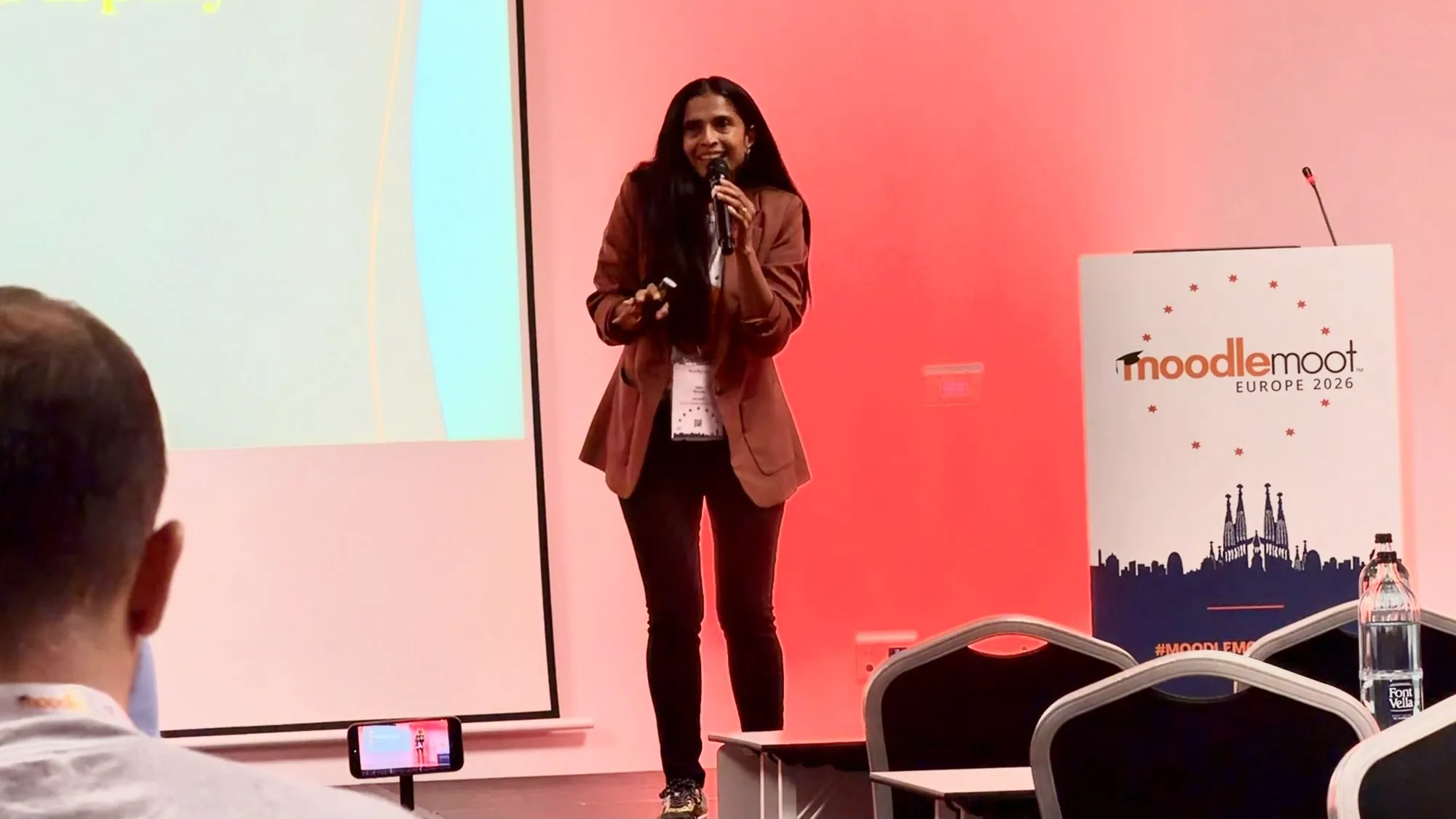
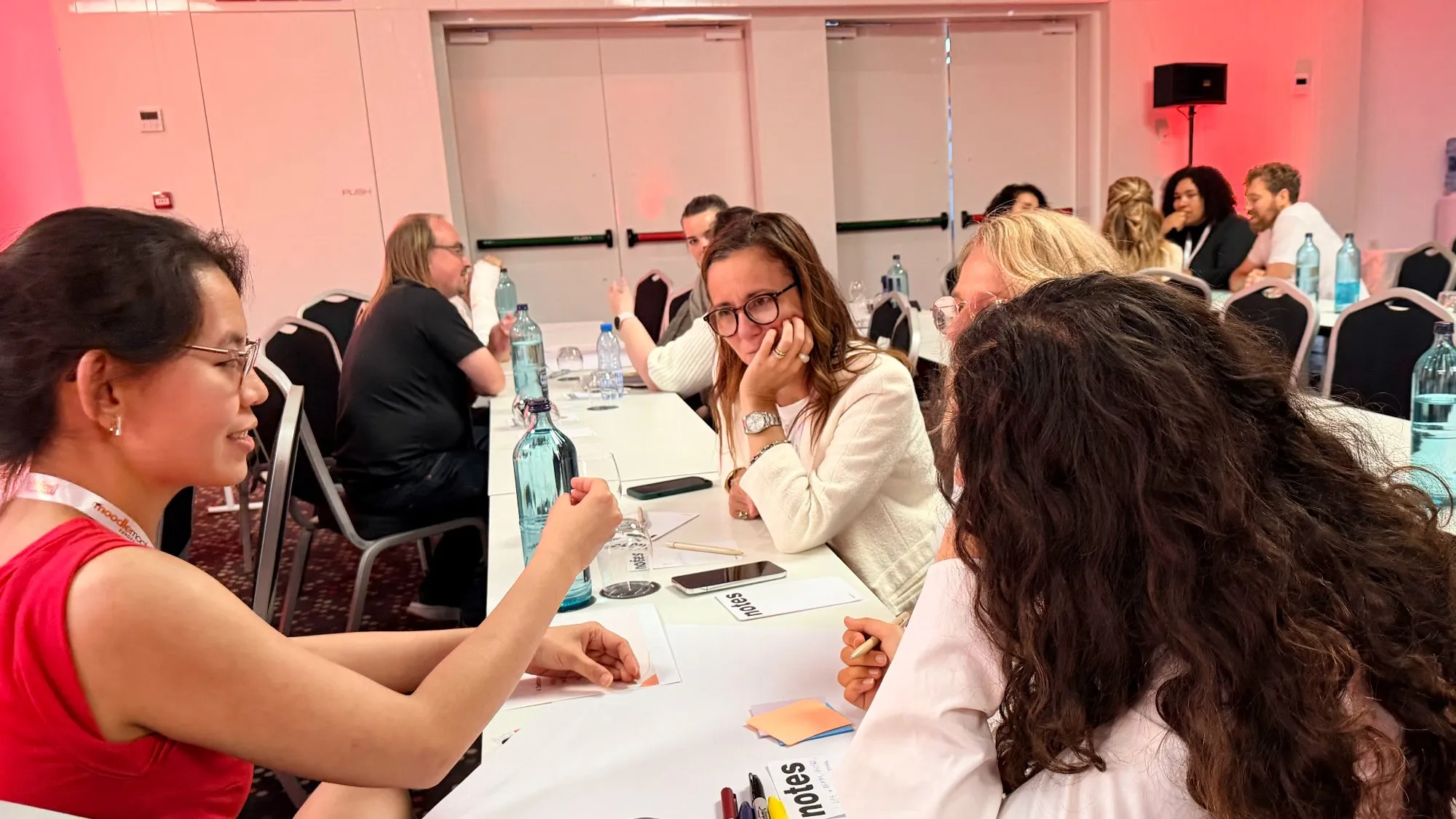
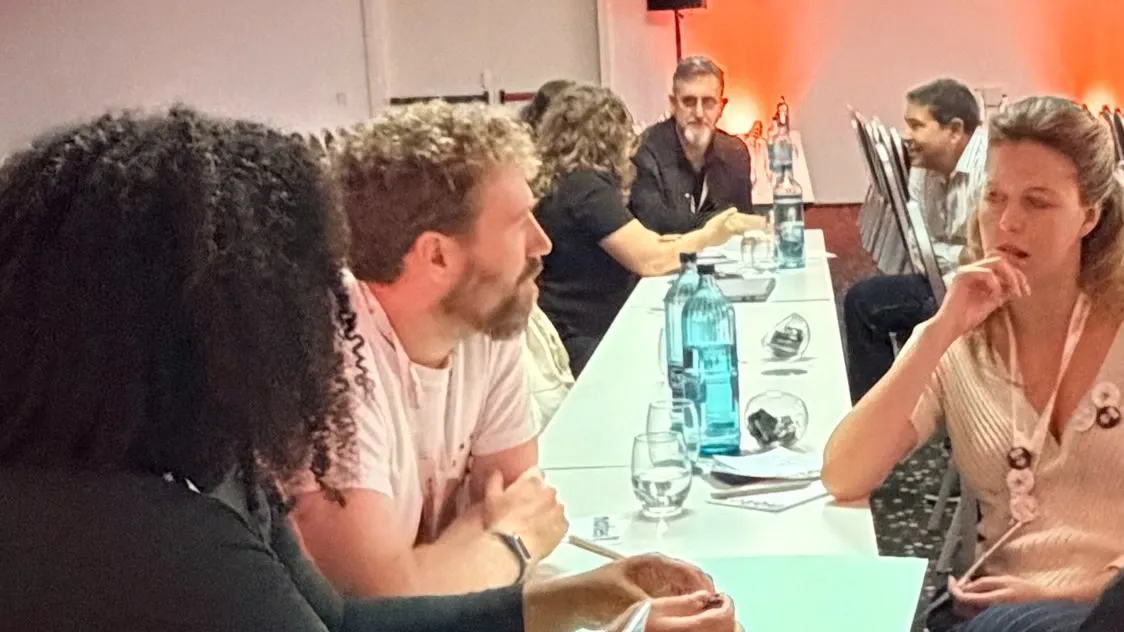
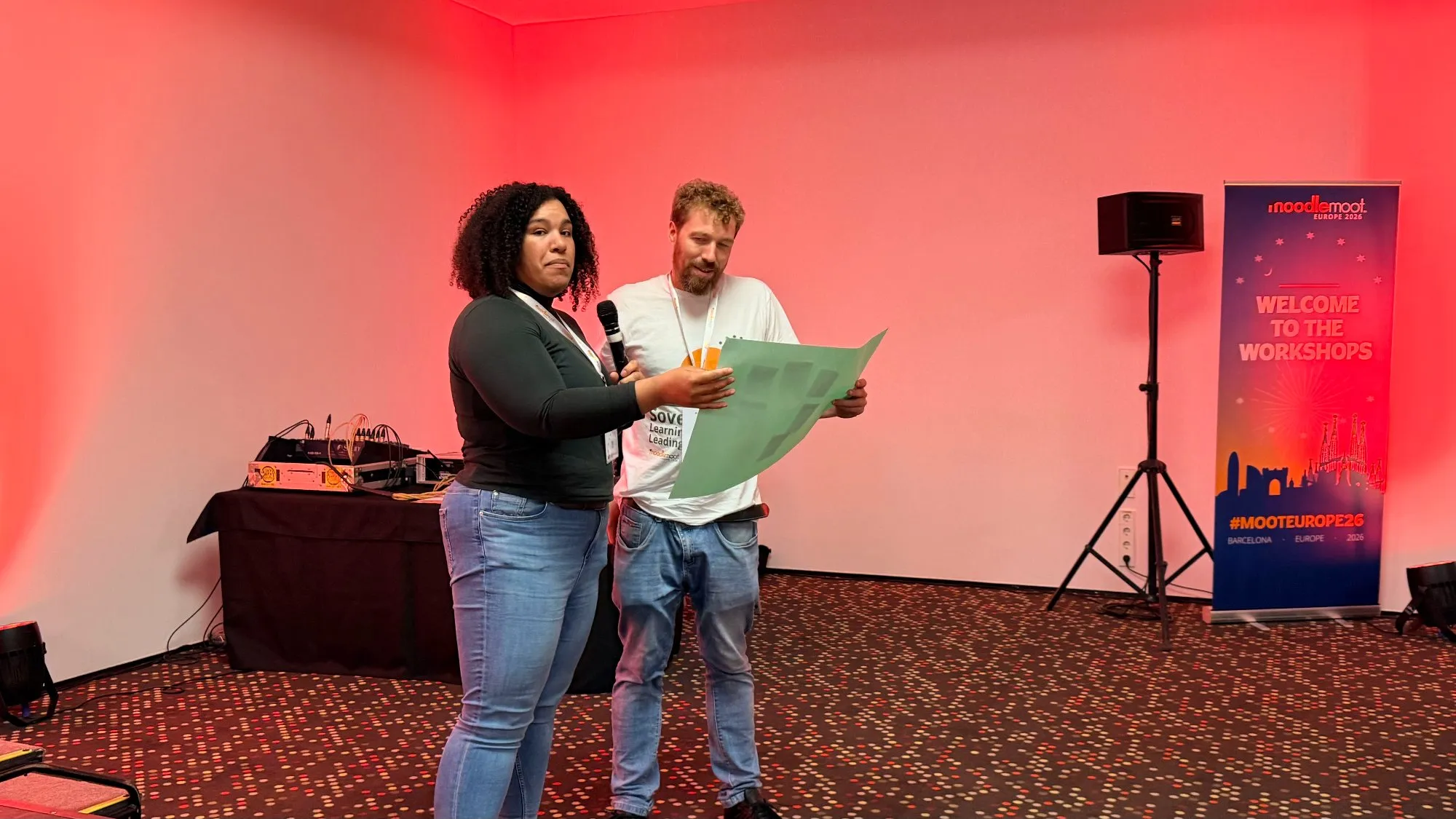
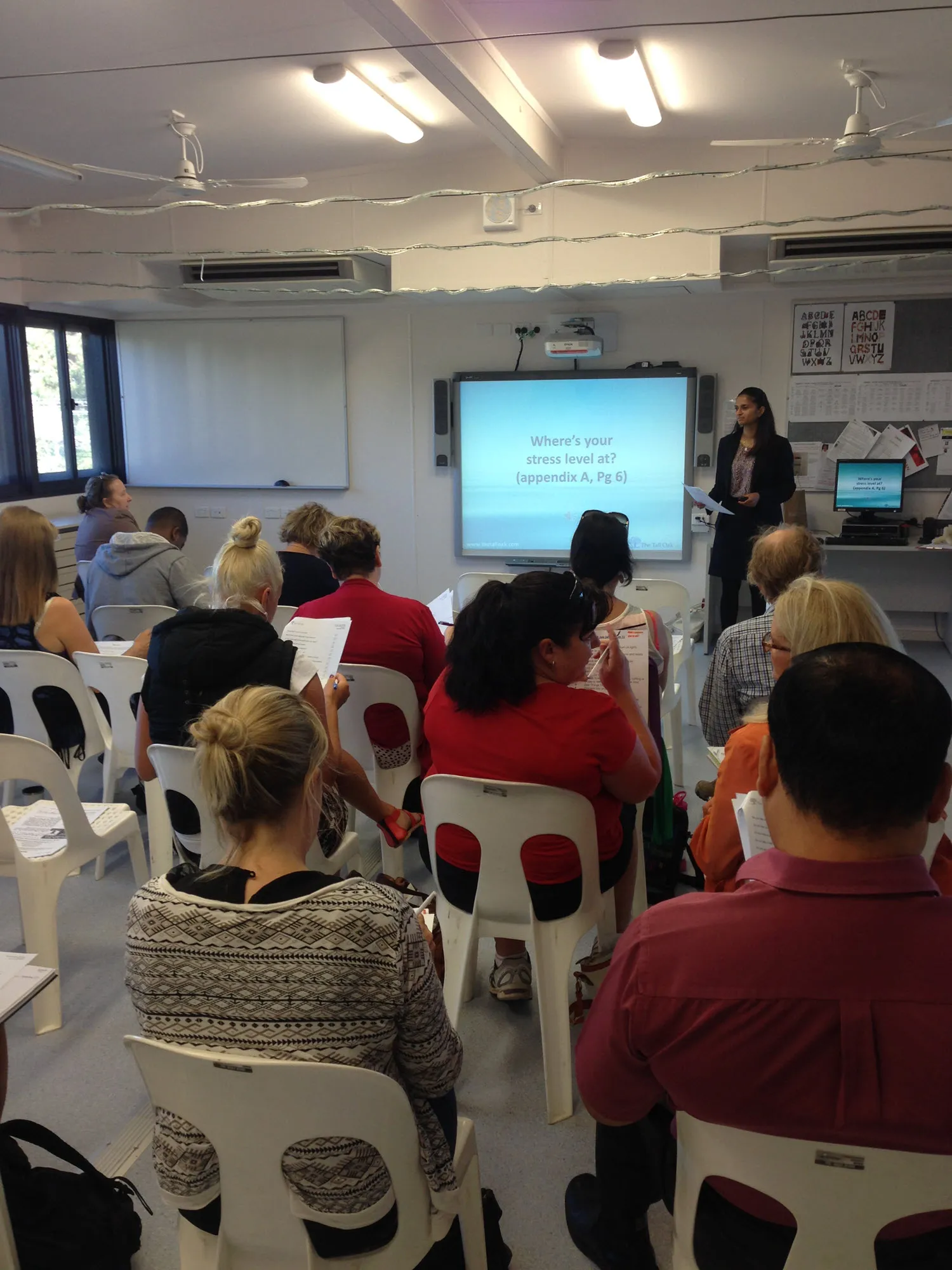
Usha presented this research at MoodleMoot Europe 2026 in Barcelona, with a talk and hands-on workshop where teams designed their own practices for each pattern.
Who it's for: Teams and organisations where everyone is busy but the results aren't following: deadlines slipping, the same people always stretched, and little room to think. It suits owners, managers and whole teams working through it together.
Work Patterns and Wellbeing Survey
Be the first to read the report
Leave your details and we will email you the full survey report as soon as it is published.
78%have accepted extra work while already at full capacity
2 in 3have worked while too unwell to work properly
1 in 3feel worn out a large part or all of the time
7.6%regularly ask for help when their workload is too high
From Usha Raman's Work Patterns and Wellbeing Survey of 210 working people, 2026. A self-selected, self-reported sample: these are patterns, not causes.
Curriculum
How it works
- Understand: the Busyness Check, an anonymous survey of your team's work patterns, unpacked in a half-day workshop and a report with agreed actions
- See what's overloading the team: unclear priorities, too many meetings, constant interruptions, always-on habits, or a few people carrying too much
- Change: leader sessions and team workshops focused on how the work gets done, not just individual resilience
- Self-override: notice the signals people push past, and agree simple practices that make it normal to stop, such as a personal stop number and regular micro-breaks
- Concealment and display: the exact words leaders can say, and staff can use, so that 'I need help' or 'can this deadline move?' feels safe to ask
- Busyness: redesign how the team recognises people, so it rewards results and learning rather than visibility or fast replies
- Switching off: agree after-hours norms the team can trust, such as what counts as urgent, scheduled send, or no reply expected until morning
- Genius zones: Identi3 profiling shows where each person does their best work, so tasks and roles can play to people's strengths
- Mental and emotional capacity: practical mindfulness and emotional intelligence tools that help people focus, recover attention and stay steady under pressure
- Systems and processes: find where unproductive patterns are built into workflows, approvals, meetings and tools, and take them out so the old habits don't creep back
- Keep it going: refresher sessions and a follow-up check, so the changes stick after the training ends
Outcomes
What changes
- More bandwidth for focused, meaningful work
- Work habits that serve productivity and wellbeing together
- Unproductive patterns removed from systems and processes
- People spending more of their time in their genius zones
- Stronger mental and emotional capacity across the team
- Clearer, shared priorities
- Asking for help and renegotiating deadlines treated as normal
- Recognition that rewards results, not looking busy
- After-hours norms that people actually trust
- Recovery protected openly, not just privately
- Workload spread more evenly across the team
Format
6 or 12 months · starts with the Busyness Check · leader sessions and team workshops · refresher sessions and a follow-up check built in
Helps address: high job demands · low role clarity · fatigue. Supports your psychosocial safety obligations.
Questions
Before you ask.
Is this just a resilience program?
No. Resilience training asks people to cope better with the load. This program also looks at the load itself: how priorities are set, how meetings run, what gets recognised, and what is expected after hours. People learn practical tools too, but the focus is on how the work gets done.
What is the research behind it?
The program draws on Usha Raman's Work Patterns and Wellbeing Survey of 210 working people, which includes five items from the Copenhagen Psychosocial Questionnaire (COPSOQ III), and on established ideas such as the Job Demands–Resources model, psychological detachment and micro-breaks. The survey is a self-selected, self-reported sample, so it shows patterns rather than causes.
How does this relate to psychosocial safety?
Psychosocial hazards include the organisational, social and job design factors that can harm psychological health, such as high job demands and low role clarity. This program helps you identify and reduce those factors, and supports your psychosocial safety obligations.
Why 6 or 12 months?
Habits like overriding fatigue or replying late at night are deeply normal, so a one-off workshop rarely shifts them. The longer format allows time to try new norms, refresh them, and check whether they are holding.
Other programs
Often run alongside this one.

Get started
Book a free consultation
Start with a conversation about what your team needs. We will tell you honestly whether we are the right fit.
Make an enquiry
Tell us about your team and what you want to shift. We usually reply within a business day.